Heart palpitations can feel unsettling. Many people describe them as a fluttering, pounding, racing, or even “skipped beat” sensation in the chest. Sometimes they last only a few seconds and go away on their own. Other times, they return repeatedly or appear alongside symptoms that feel more alarming.
So the natural question patients often ask is: When should I worry about heart palpitations? The truth is, not all palpitations are dangerous—but some can be an early warning sign of a heart rhythm problem or another underlying condition that needs urgent attention.
Important Note
Heart palpitations can range from completely harmless to medically serious. In many cases, they are triggered by stress, caffeine, dehydration, or anxiety. However, they can also be linked to heart rhythm disorders or other conditions that require immediate evaluation. Understanding the difference can help you respond quickly and appropriately if symptoms worsen.
Table of Contents
- What Are Heart Palpitations?
- Normal vs Dangerous Palpitations
- Common Causes of Heart Palpitations
- Warning Signs You Should Never Ignore
- Medical Conditions Linked to Palpitations
- How Palpitations Feel in the Body
- When Should You Worry About Heart Palpitations?
- Important Safety Reminder
- How Doctors Diagnose Heart Palpitations
- Treatment and Emergency Care Options
- How to Reduce Heart Palpitations
- When Palpitations Become an Emergency
- Emergency Care in Houston
- Frequently Asked Questions
What Are Heart Palpitations?
Heart palpitations are sensations where you become aware of your heartbeat. Normally, the heart beats in a steady, unnoticed rhythm. But during palpitations, this rhythm feels exaggerated or irregular.
Some people feel their heart is beating too fast. Others describe a “flip-flop” feeling in the chest or neck. These sensations can occur while resting, sitting, lying down, or even during sleep.
In many cases, palpitations are harmless and temporary. However, when they become frequent, prolonged, or combined with other symptoms like chest pain or dizziness, they may indicate something more serious.
Normal vs Dangerous Palpitations
Not all palpitations are a cause for alarm. For example, it is common to feel your heart race after exercise, emotional stress, or caffeine intake. These are typically normal responses of the body.
However, dangerous palpitations are different. They tend to occur unexpectedly, without clear triggers, and may be associated with symptoms that affect your overall well-being.
What makes palpitations concerning is not always the sensation itself—but what happens alongside it.
Common Causes of Heart Palpitations
There are many possible reasons why someone may experience heart palpitations. Some are harmless lifestyle-related triggers, while others are medical conditions that require evaluation.
Common non-serious causes include stress, anxiety, dehydration, lack of sleep, caffeine, energy drinks, nicotine, and certain medications. Hormonal changes, especially during pregnancy or menstruation, can also trigger palpitations.
On the other hand, palpitations may also be linked to thyroid disorders, anemia, low blood sugar, or heart rhythm abnormalities such as atrial fibrillation.
Because the causes vary widely, persistent or unexplained palpitations should not be ignored.
Warning Signs You Should Never Ignore
Heart palpitations become more concerning when they appear with additional symptoms. These warning signs suggest that the heart may not be functioning properly or that blood flow to the body is being affected.
If palpitations are accompanied by chest pain, pressure, shortness of breath, fainting, severe dizziness, or sweating, they should be treated as a medical emergency.
Another red flag is a very rapid or irregular heartbeat that does not settle down after rest. If symptoms feel different from your usual experience, it is always safer to get checked immediately.
Medical Conditions Linked to Palpitations
In some cases, palpitations can be a sign of underlying heart conditions. These may include arrhythmias, atrial fibrillation, supraventricular tachycardia, or ventricular irregularities.
Other medical issues such as hyperthyroidism, electrolyte imbalance, or infections can also affect heart rhythm.
In rare but serious cases, palpitations may be an early warning sign of a heart attack or other cardiovascular emergency. This is why proper evaluation is essential when symptoms persist or worsen.
How Palpitations Feel in the Body
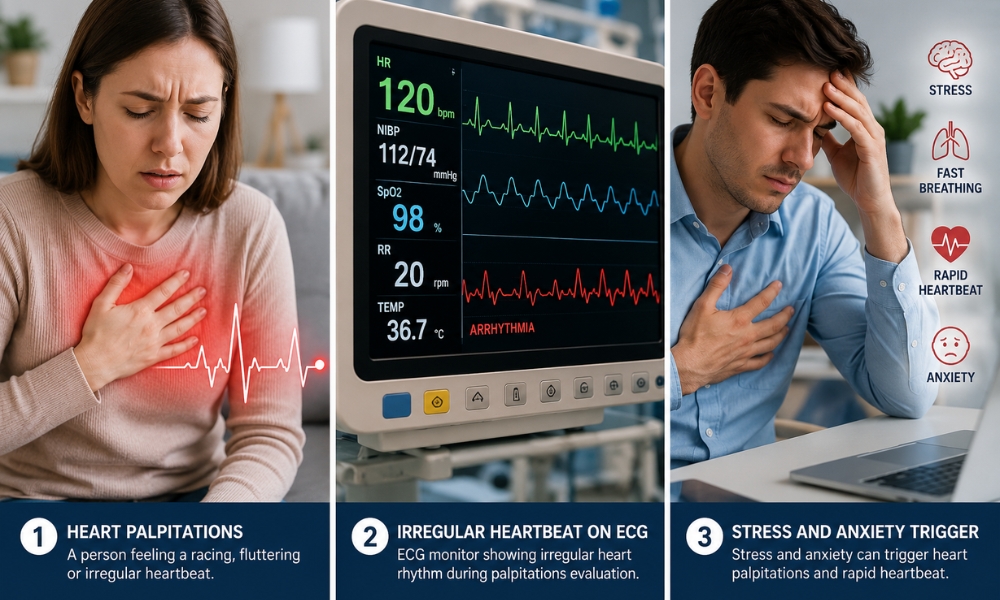
Patients often struggle to describe exactly how palpitations feel. Some say it feels like the heart is “jumping” inside the chest, while others feel a pounding sensation in the throat or neck.
There are also cases where the heart seems to pause briefly before beating strongly again. This can create anxiety, making the sensation feel even more intense.
Even though the feeling is uncomfortable, the intensity of symptoms does not always match the severity of the underlying cause. That is why medical evaluation becomes important if episodes repeat.
When Should You Worry About Heart Palpitations?
You should worry about heart palpitations when they start to interfere with daily life or occur alongside concerning symptoms. If you experience palpitations while resting, especially if they are sudden and unexplained, they should not be ignored.
Palpitations lasting more than a few minutes, or those that come with chest discomfort, breathing difficulty, or fainting episodes, require urgent evaluation.
If you find yourself frequently thinking about your heartbeat or feeling anxious because of repeated episodes, it is also a sign that medical guidance is needed.
In simple terms, palpitations become concerning when they are new, worsening, unpredictable, or associated with other symptoms.
Important Note
Not every episode of heart palpitations means there is a life-threatening condition. Many patients experience them due to stress, fatigue, or dehydration. However, self-diagnosing can be risky because heart rhythm issues often feel similar in early stages. If symptoms feel unusual or worrying, getting evaluated early can prevent complications and provide peace of mind.
How Doctors Diagnose Heart Palpitations
When you visit an emergency room or healthcare provider, doctors begin by understanding your symptoms in detail. They may ask when the palpitations started, how long they last, and whether they are triggered by anything specific.
Diagnostic tools such as an electrocardiogram (EKG), blood tests, and heart monitoring devices are commonly used. These tests help identify whether the heart rhythm is normal or irregular.
In some cases, imaging tests or continuous monitoring may be required to detect intermittent rhythm issues that do not appear during a short visit.
Treatment and Emergency Care Options
Treatment depends entirely on the cause of the palpitations. If they are related to lifestyle factors like caffeine or stress, simple adjustments may be enough to reduce symptoms.
However, if an underlying heart condition is detected, treatment may involve medications, intravenous fluids, or procedures to stabilize heart rhythm.
In emergency situations, immediate intervention is necessary to restore normal heart function and prevent complications. This is why timely evaluation plays a critical role in outcomes.
How to Reduce Heart Palpitations
While not all palpitations can be prevented, certain lifestyle changes can significantly reduce their frequency. Staying hydrated, managing stress, avoiding excessive caffeine, and getting enough sleep are often helpful.
Regular medical checkups can also help identify underlying conditions early, especially if you have a history of heart-related symptoms.
Listening to your body is important. If palpitations become more frequent, tracking when they happen can help doctors identify patterns and triggers.
When Palpitations Become an Emergency
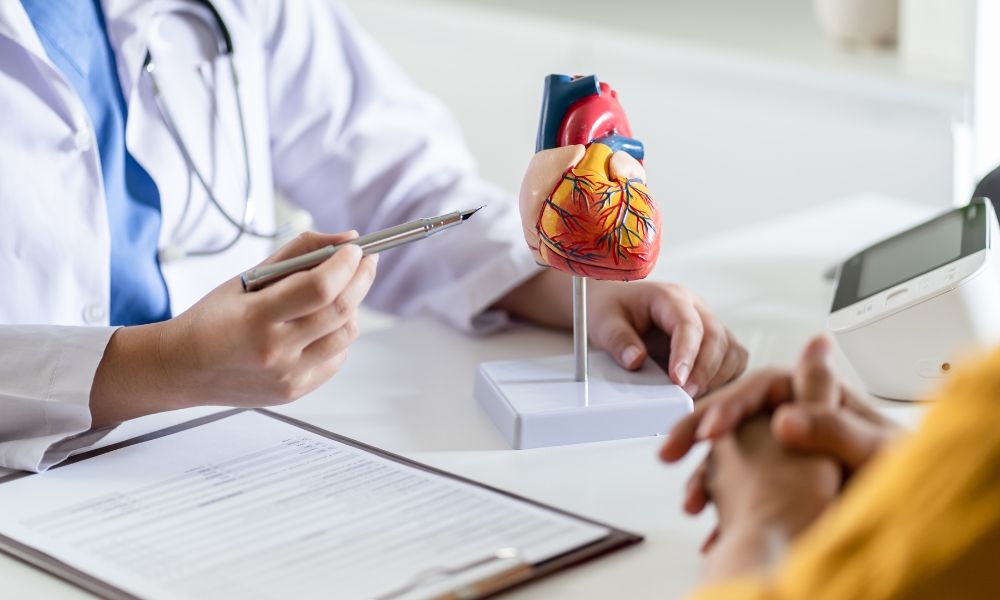
Heart palpitations become an emergency when they are associated with symptoms like chest pain, severe shortness of breath, fainting, or sudden weakness.
These symptoms may indicate that the heart is not pumping blood effectively, which requires immediate medical attention.
In such cases, going to an emergency room is the safest decision rather than waiting for symptoms to resolve on their own.
Emergency Care in Houston
If you are in Houston and experiencing concerning heart palpitations, immediate evaluation is available at Montrose Emergency Room. Our facility provides 24/7 no-wait emergency care for patients experiencing chest discomfort, irregular heartbeat, dizziness, or other cardiac-related symptoms.
We are fully equipped with advanced diagnostic tools including EKG, CT scans, and rapid testing to evaluate heart rhythm and identify serious conditions quickly. Our board-certified physicians specialize in emergency cardiac assessment and urgent stabilization when needed.
For patients searching for “ER near me in Houston”, quick access to care can make a critical difference in outcomes.
Common ER Symptoms |
Chest Pain Emergency Care |
Breathing Difficulties ER |
Urgent Care vs ER |
24 Hour Emergency Care Houston |
Pediatric Emergency Care
Important Note
If heart palpitations occur with chest pain, fainting, or breathing difficulty, do not wait to see if symptoms improve. Seek emergency care immediately. Early evaluation can be lifesaving in cardiac-related emergencies.
Frequently Asked Questions
Are heart palpitations always serious?
No, many palpitations are harmless and linked to stress, caffeine, or fatigue. However, persistent or severe episodes should always be checked.
Can anxiety cause heart palpitations?
Yes, anxiety is one of the most common triggers of palpitations and can cause a rapid or irregular heartbeat sensation.
When should I go to the ER for heart palpitations?
You should go to the ER if palpitations occur with chest pain, dizziness, fainting, or shortness of breath.
Can dehydration cause palpitations?
Yes, dehydration can affect electrolyte balance and lead to irregular heartbeat sensations.
How are palpitations tested?
Doctors use EKGs, blood tests, and heart monitoring to identify rhythm issues and underlying causes.
Medical Disclaimer
This article is for educational purposes only and does not replace professional medical advice. If you are experiencing severe or worsening symptoms, seek immediate evaluation from a qualified healthcare provider or emergency room.