
Sudden blurred vision and loss of balance can be frightening, especially when they happen at the same time. While these symptoms can have less serious causes, their sudden onset can also signal a stroke or transient ischemic attack (TIA). Stroke symptoms often appear without warning, and both sudden vision changes and sudden difficulty walking or staying balanced are recognized warning signs.
If blurred vision and loss of balance begin suddenly, do not wait to see whether they go away. Stroke treatment is time-sensitive, and the safest response is to call 911 immediately, note when the symptoms started, and let emergency medical personnel begin the evaluation.

Quick Answer: Can Blurred Vision and Loss of Balance Be a Stroke?
Yes. Sudden blurred or double vision combined with sudden loss of balance, dizziness, or difficulty walking can be a sign of stroke. Other warning signs include facial drooping, weakness or numbness on one side, trouble speaking, confusion, or a sudden severe headache. If these symptoms appear suddenly, call 911 immediately, even if they improve or disappear.
Table of Contents
- Can Blurred Vision and Loss of Balance Mean a Stroke?
- Remember B.E. F.A.S.T. for Stroke
- Why Can a Stroke Cause Blurred Vision?
- Why Can a Stroke Cause Loss of Balance?
- What Other Stroke Symptoms Should You Watch For?
- What Else Can Cause Blurred Vision and Loss of Balance?
- When Should You Go to the ER?
- What Should You Do If Symptoms Start Suddenly?
- How Is a Possible Stroke Diagnosed?
- Emergency Stroke Evaluation in Houston
- Frequently Asked Questions
- Final Thoughts

Can Blurred Vision and Loss of Balance Mean a Stroke?
Yes. Sudden blurred vision and loss of balance can be symptoms of a stroke, particularly when they develop together or appear alongside other neurological changes.
A stroke occurs when blood flow to part of the brain becomes blocked or when a blood vessel in the brain ruptures. Because different parts of the brain control vision, movement, coordination, speech, and balance, a stroke can produce very different symptoms depending on which area is affected.
The important word is sudden. A person who suddenly cannot see clearly, feels unexpectedly unsteady, starts walking strangely, or has difficulty coordinating their movements should not assume the problem is simply fatigue, an inner-ear issue, or an eye problem.
Sudden trouble seeing and sudden dizziness, trouble walking, or loss of balance are both recognized stroke warning signs by the Centers for Disease Control and Prevention and the American Stroke Association.
Remember B.E. F.A.S.T. for Stroke
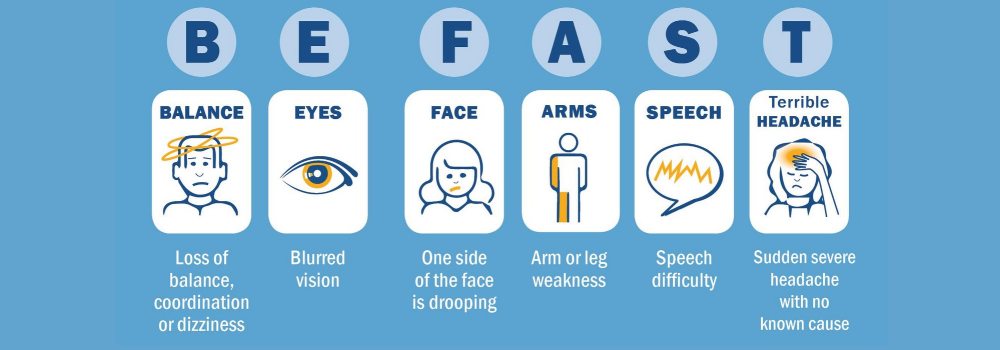
When stroke symptoms are difficult to recognize, the B.E. F.A.S.T. warning system can help. It adds balance and vision changes to the familiar FAST warning signs.
- B = Balance: Is there sudden loss of balance, coordination, or difficulty walking?
- E = Eyes: Is there sudden blurred vision, double vision, or loss of vision?
- F = Face: Does one side of the face droop or feel numb?
- A = Arms: Is one arm weak or numb, or does one arm drift downward when both arms are raised?
- S = Speech: Is speech slurred, confused, or difficult to understand?
- T = Time: Call 911 immediately and note the time the symptoms first appeared.
The American Stroke Association specifically identifies sudden balance loss and sudden eye or vision changes as stroke warning signs. The organization recommends calling 911 when these symptoms occur rather than waiting for additional symptoms to appear.
You do not need to have every B.E. F.A.S.T. symptom to need emergency help. One sudden stroke warning sign can be enough to call 911.
Why Can a Stroke Cause Blurred Vision?
Vision depends on several areas of the brain and the pathways that carry visual information. When a stroke interrupts blood flow to one of these areas, the person may suddenly experience blurred vision, double vision, difficulty seeing to one side, or partial or complete loss of vision.
The American Stroke Association notes that sudden trouble seeing in one or both eyes can occur during a stroke. Depending on the part of the brain affected, the visual change may involve one eye, both eyes, or a particular area of the visual field.
This means that blurred vision should not automatically be blamed on glasses, contact lenses, eye strain, dehydration, or screen use when it begins abruptly.
For example, someone might suddenly notice that objects look doubled, the room appears visually distorted, or part of their normal field of vision seems missing. If the change occurs together with dizziness or difficulty walking, the combination deserves immediate emergency evaluation.
What Does Stroke-Related Vision Loss Feel Like?
Stroke-related vision symptoms can vary. A person may describe:
- Sudden blurred vision
- Double vision
- Sudden loss of vision in one or both eyes
- Difficulty seeing objects clearly
- Missing part of the visual field
- Difficulty moving the eyes normally
Not every sudden vision problem is caused by a stroke. However, it is not possible to safely determine the cause based on the symptom alone, especially when other neurological symptoms are present.
Why Can a Stroke Cause Loss of Balance?
The brain controls balance and coordination through several structures, including the cerebellum and brainstem. A stroke affecting these areas can suddenly make it difficult to stand, walk, coordinate movements, or remain upright.
According to the American Stroke Association, sudden balance loss can cause dizziness, difficulty walking, an unsteady gait, or problems with coordination. A stroke involving the cerebellum may also cause dizziness, nausea, or vomiting.
Someone experiencing a stroke may say that the room is spinning, feel as though they are being pulled to one side, or suddenly become unable to walk normally. In some cases, there may be no obvious arm or leg weakness at first.
That is one reason sudden loss of balance should not be dismissed simply because the person can still move their arms and legs.
What Other Stroke Symptoms Should You Watch For?
Blurred vision and balance problems become even more concerning when they occur with other sudden neurological changes.
Sudden weakness or numbness
One side of the face, arm, or leg may suddenly feel weak, heavy, numb, or difficult to control. This can make walking or using one arm difficult.
Facial drooping
One side of the face may droop or feel numb. Asking the person to smile can sometimes reveal an uneven smile.
Speech changes
A person may suddenly slur words, have trouble finding the right words, speak unusually, or have difficulty understanding what someone else is saying.
Confusion
Sudden confusion or an unexpected change in awareness can be another sign that the brain is not functioning normally.
Sudden severe headache
A sudden, severe headache with no known cause can occur with stroke, particularly certain types of hemorrhagic stroke. It should be treated as an emergency when it begins abruptly or is accompanied by neurological symptoms.
The CDC lists sudden trouble walking, dizziness, loss of balance, sudden trouble seeing, one-sided weakness or numbness, confusion or speech problems, and sudden severe headache among the major warning signs of stroke.
Important: Do Not Wait for Stroke Symptoms to Get Worse
If blurred vision and loss of balance start suddenly, call 911. Do not wait for facial drooping, arm weakness, or speech problems to appear. Stroke symptoms can vary from person to person, and early treatment can reduce the risk of permanent brain damage and disability.
If symptoms disappear after a few minutes, emergency evaluation is still necessary because a transient ischemic attack, or TIA, can produce temporary stroke-like symptoms and may warn of a future stroke.
What Else Can Cause Blurred Vision and Loss of Balance?
Stroke is not the only possible explanation for blurred vision and balance problems. Several other conditions can cause similar symptoms.
Inner-ear disorders
Problems involving the inner ear can cause vertigo, dizziness, nausea, and difficulty maintaining balance. Some people may feel as though the room is spinning.
Migraine
Migraine can sometimes cause visual changes, dizziness, sensitivity to light, or problems with coordination. A person who has a known history of similar migraine symptoms may recognize the pattern.
Low blood sugar
Low blood glucose can cause dizziness, weakness, confusion, blurred vision, sweating, shakiness, and other symptoms. This can be especially important for people who use medications that lower blood sugar.
Dehydration
Significant dehydration can contribute to dizziness, weakness, and lightheadedness. Severe dehydration may require emergency evaluation, particularly when a person cannot keep fluids down or develops confusion or other serious symptoms.
Montrose Emergency Room also provides emergency evaluation for dehydration and electrolyte imbalance when symptoms become severe.
Medication or substance effects
Some medications, alcohol, or other substances can affect blood pressure, alertness, coordination, or vision.
Eye problems
Certain eye conditions can cause sudden changes in vision and require urgent evaluation. However, an eye-related explanation should not be assumed when sudden vision changes occur together with new neurological symptoms such as loss of balance or difficulty speaking.
The key issue is that several conditions can look similar at first. A medical professional needs to determine whether the symptoms represent a stroke, TIA, another neurological condition, or a different emergency.
When Should You Go to the ER?
Sudden blurred vision and sudden loss of balance should be treated as an emergency, especially when they occur together.
Call 911 immediately if either symptom begins suddenly, particularly when accompanied by:
- Face drooping
- One-sided weakness or numbness
- Difficulty speaking or understanding speech
- Sudden confusion
- Difficulty walking
- Severe dizziness or coordination problems
- Double vision or sudden vision loss
- A sudden severe headache
- Nausea or vomiting with severe dizziness or neurological symptoms
- Loss of consciousness
The CDC recommends calling 911 immediately when stroke warning signs occur. It also advises against driving yourself or having someone else drive you because emergency medical personnel can begin care during transportation.
What if the symptoms go away?
Do not assume the danger has passed.
A TIA can cause stroke-like symptoms that disappear after a short time. However, it is not possible to reliably distinguish a TIA from a stroke at home. The American Stroke Association and National Institute of Neurological Disorders and Stroke advise immediate medical evaluation even when symptoms resolve.
Temporary blurred vision or temporary loss of balance can still be a warning that requires urgent attention.
What Should You Do If Symptoms Start Suddenly?
If you or someone nearby suddenly develops blurred vision and loss of balance, focus on getting emergency help rather than trying to identify the exact cause at home.
- Call 911 immediately. Tell the dispatcher that you suspect a stroke.
- Note the time symptoms began. If the exact time is unknown, note the last time the person was known to be normal.
- Do not drive yourself. EMS can begin assessment and care while transporting the patient.
- Do not wait for symptoms to become more obvious. A person does not need to develop every B.E. F.A.S.T. symptom before emergency care is needed.
- Tell emergency personnel about medications and relevant medical history. This can help the medical team make rapid decisions.
Knowing when symptoms started is especially important because some stroke treatments are time-sensitive. Faster evaluation can help determine whether emergency stroke treatment may be appropriate.
How Is a Possible Stroke Diagnosed?
When a person arrives with possible stroke symptoms, clinicians need to quickly determine what is happening in the brain and whether blood flow has been blocked or bleeding is occurring.
The evaluation may include a neurological examination, blood pressure measurement, blood testing, and brain imaging. CT or MRI imaging may help identify bleeding, brain injury, or other abnormalities. Additional testing may be needed depending on the symptoms and suspected cause.
The medical team also considers when the symptoms started, whether they are still present, the person’s medical history, medications, and stroke risk factors.
Importantly, blurred vision and balance problems cannot be safely diagnosed as a stroke or ruled out as a stroke based only on how the symptoms feel.
Why timing matters
Stroke treatment depends partly on the type of stroke, the location of the problem, the patient’s condition, and how long ago symptoms began. Some treatments are most effective when given as soon as possible after symptoms start.
That is why waiting at home to see whether blurred vision or dizziness improves can reduce the opportunity for timely evaluation and treatment. The American Stroke Association emphasizes that stroke is a medical emergency and that every minute matters.
Emergency Stroke Evaluation in Houston
When sudden neurological symptoms occur, emergency medical evaluation should happen immediately. Montrose Emergency Room provides 24/7 emergency care in Houston and specifically lists stroke among the conditions evaluated at the facility. Its stroke care page emphasizes the need for immediate attention when stroke symptoms appear.
Montrose Emergency Room is located at 1110 W. Gray St #101, Houston, TX 77019, near Montrose and convenient to surrounding areas including Midtown, River Oaks, and Downtown Houston.
For patients experiencing possible stroke symptoms, however, calling 911 is the safest first step. EMS can begin emergency assessment and determine the appropriate destination while the patient is transported.
For other urgent symptoms that may require emergency evaluation, see common ER symptoms or learn more about 24-hour emergency medical care in Houston.
Sudden Vision Changes or Loss of Balance Need Immediate Attention
Blurred vision and loss of balance that begin suddenly can be warning signs of stroke. Do not wait for symptoms to become severe or disappear. Call 911 immediately for suspected stroke symptoms.
If you need information about Montrose Emergency Room’s 24/7 emergency services, call (832) 487-0911.
Frequently Asked Questions
Can blurred vision and dizziness be a sign of a stroke?
Yes. Sudden trouble seeing and sudden dizziness or loss of balance are recognized stroke warning signs. The combination becomes especially concerning when it starts abruptly or occurs with weakness, numbness, facial drooping, speech difficulty, confusion, or a severe headache.
Can a stroke cause loss of balance without weakness?
Yes. A stroke can affect areas of the brain responsible for balance and coordination without immediately causing obvious weakness in an arm or leg. Sudden difficulty walking, severe unsteadiness, dizziness, or loss of coordination can be a stroke warning sign.
Is sudden blurred vision always a stroke?
No. Migraine, eye conditions, medication effects, low blood sugar, and other problems can cause visual changes. However, sudden blurred vision can be a stroke warning sign, so it should not be dismissed when it begins unexpectedly, particularly when other neurological symptoms occur.
What does a stroke-related balance problem feel like?
A person may suddenly feel dizzy, unsteady, or unable to walk normally. Some people feel as though they are being pulled to one side or cannot coordinate their movements. Stroke-related balance problems may also occur with nausea, vomiting, or other neurological symptoms.
What should I do if blurred vision and balance problems go away?
Still seek emergency medical evaluation. Temporary stroke-like symptoms can occur with a TIA, which can be a warning of a future stroke. It is not safe to assume that symptoms are harmless simply because they disappeared.
Should I drive to the ER if I think I am having a stroke?
No. Call 911 instead. Emergency medical personnel can begin assessment during transport and help the patient reach appropriate emergency care. The CDC specifically recommends calling 911 rather than driving yourself or having someone else drive you when stroke symptoms occur.
How quickly should I seek help for sudden blurred vision and loss of balance?
Immediately. Sudden blurred vision and loss of balance can be stroke symptoms, and stroke treatment is time-sensitive. Call 911 as soon as the symptoms appear and note the time they began.
Final Thoughts
Blurred vision and loss of balance can have many causes, but when these symptoms appear suddenly, stroke needs to be taken seriously. A person may not have the classic combination of facial drooping and arm weakness. Sudden vision changes or sudden difficulty walking and maintaining balance can be enough to warrant emergency action.
Remember B.E. F.A.S.T.: balance loss, eye or vision changes, face drooping, arm weakness, speech difficulty, and time to call 911. If symptoms appear suddenly, do not wait to see what happens next.
Fast emergency evaluation gives medical professionals the best opportunity to identify a stroke or another serious condition and determine the appropriate treatment.
Medical Disclaimer: This article is intended for general educational purposes only and does not replace professional medical evaluation, diagnosis, or treatment. Sudden blurred vision, loss of balance, weakness, speech difficulty, confusion, or other possible stroke symptoms require immediate emergency medical attention. Call 911 for suspected stroke symptoms.